<The Math Behind AI> A Book for Developers Who Scroll Past Equations

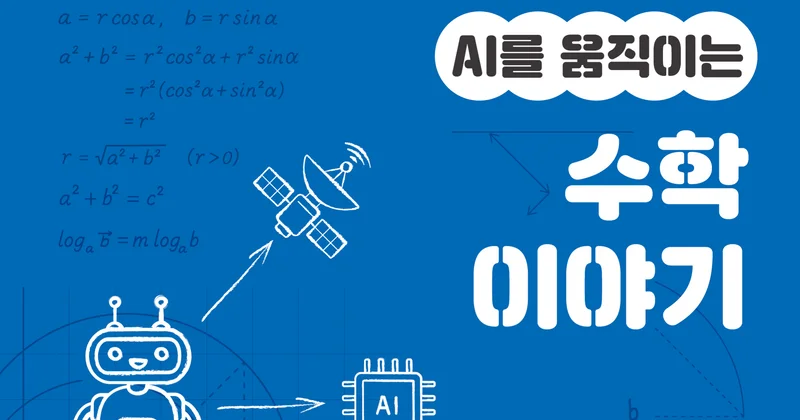
This review was written as part of Hanbit Media's <I Am a Reviewer> program, which provided the book.
Why I Picked This Book
I'm the type who scrolls faster the moment equations show up in a paper. I can call PyTorch APIs just fine, but I couldn't really explain what's being computed under the hood. A beta reader's comment caught my eye: "It doesn't throw formulas at you first." A math book that doesn't start with formulas? That was enough to make me curious.
Who Should Read This
- You can use AI libraries but want to understand what's happening inside
- You skip over equations in papers and tech blogs
- You haven't touched matrices or calculus since high school
On the flip side, if you're looking for copy-paste-ready code, this isn't it. There's no programming code at all — it focuses entirely on equations and geometric interpretation.
What It's Like
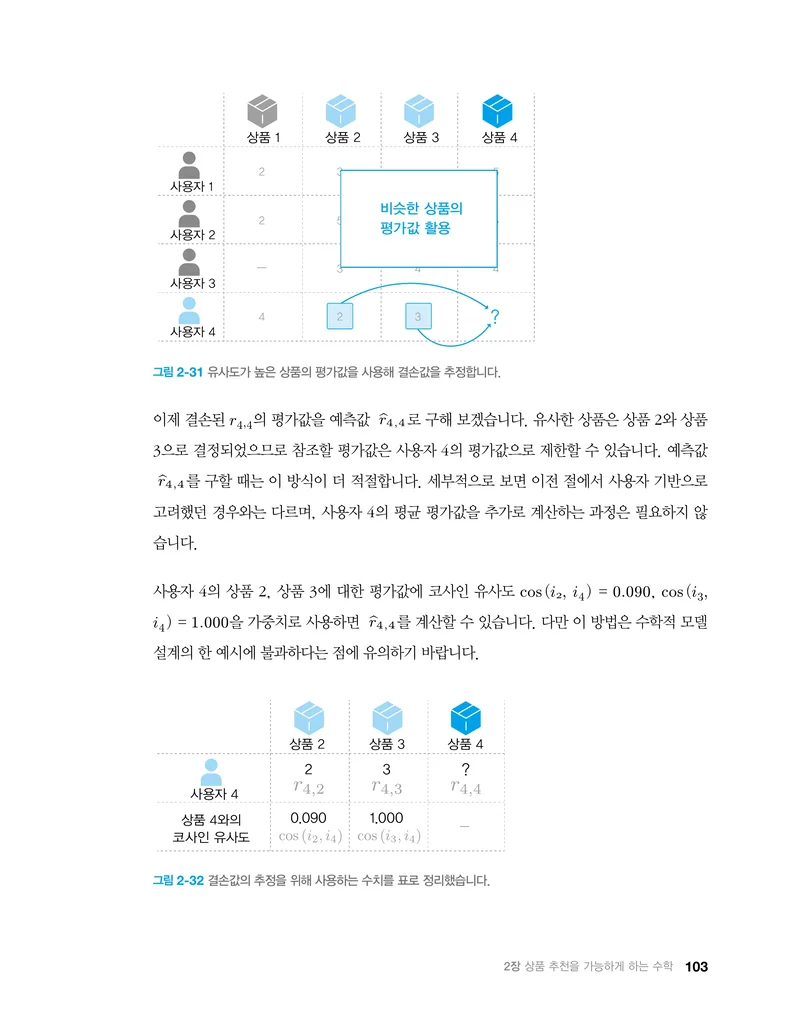
The biggest differentiator is the order of explanation. Most textbooks stack definitions and formulas on the first page of each chapter. This book shows you how a service works first, then introduces the math as a tool needed along the way. Follow how search, recommendation, image recognition, or NLP services actually operate, and the math starts to make sense.
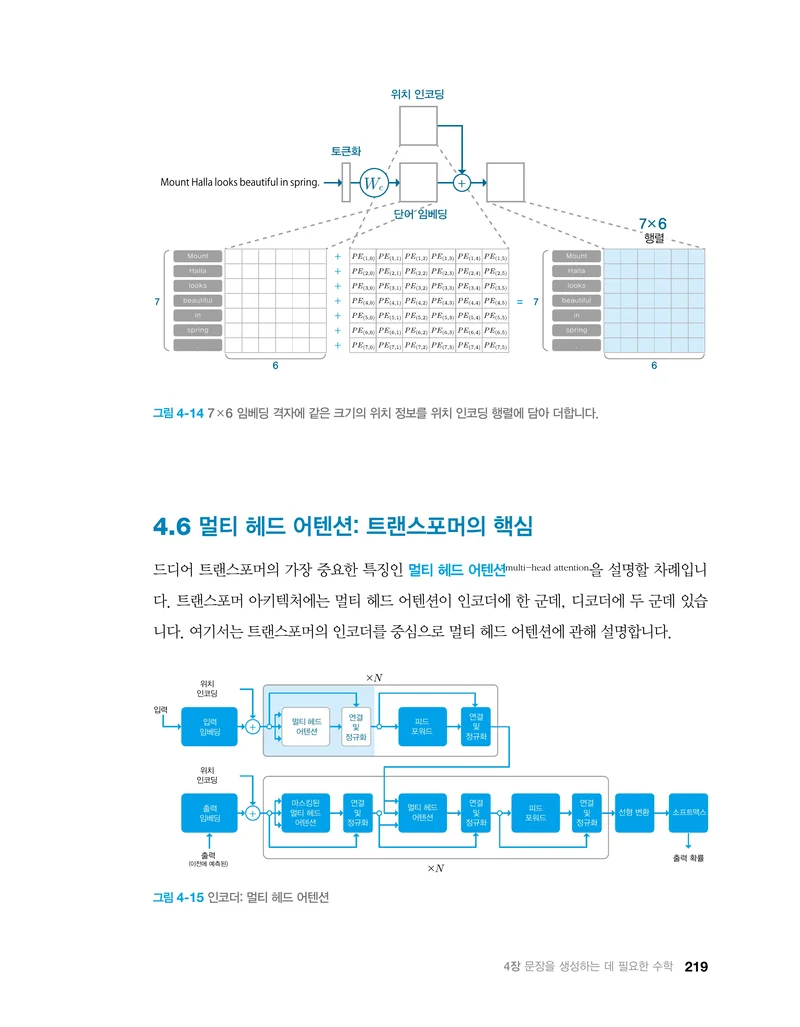
It also doesn't skip intermediate steps. You know that sinking feeling when a textbook says "the rest is trivial and left as an exercise"? That doesn't happen here. Matrix multiplications are fully expanded. The part in Chapter 4 where the attention mechanism is broken down using grids finally made concepts click that I'd previously just memorized.
That said, with no code at all, translating the math into an actual implementation is entirely on you. A bit of pseudocode at the end of each chapter would have been a nice bridge.
Structure
The book has 6 chapters total. Information retrieval, product recommendation, image classification, text generation (Transformers), speech analysis, and position estimation — each chapter picks a different AI service as its subject and unpacks the math needed to understand it. The appendix even covers the mathematical foundations of relativity theory, so the scope is surprisingly broad.
Final Thoughts
A line from the preface sums up the book well: "Knowledge without developing the ability to think is mere consumption." This is a book for people who want to understand principles rather than chase quick results. If you're someone who instinctively scrolls past equations like I used to, you might be surprised at how approachable it actually is.
#한빛미디어 #나는리뷰어다 #AI를움직이는수학이야기